Core Distinction: Role and Function
SDIC (Sodium Dichloroisocyanurate) and Cyanuric Acid (CYA, Stabilizer) are fundamentally different chemicals in pool maintenance. They are not interchangeable.
Feature | SDIC (Sodium Dichlor) | Cyanuric Acid (CYA, Stabilizer) |
Primary Role | Disinfectant / Oxidizer | Stabilizer / Protector |
Core Function | 1. Kills bacteria, algae, and viruses. | Protects Free Chlorine from rapid degradation by ultraviolet (UV) rays in sunlight. |
What it Releases | Dissolves in water to release: | Does not release chlorine. It is the "sunscreen" for chlorine. |
Chemical Nature | An organic chlorine compound. A potent oxidizer. | An organic acid. It is not an oxidizer or sanitizer. |
Detailed Explanation
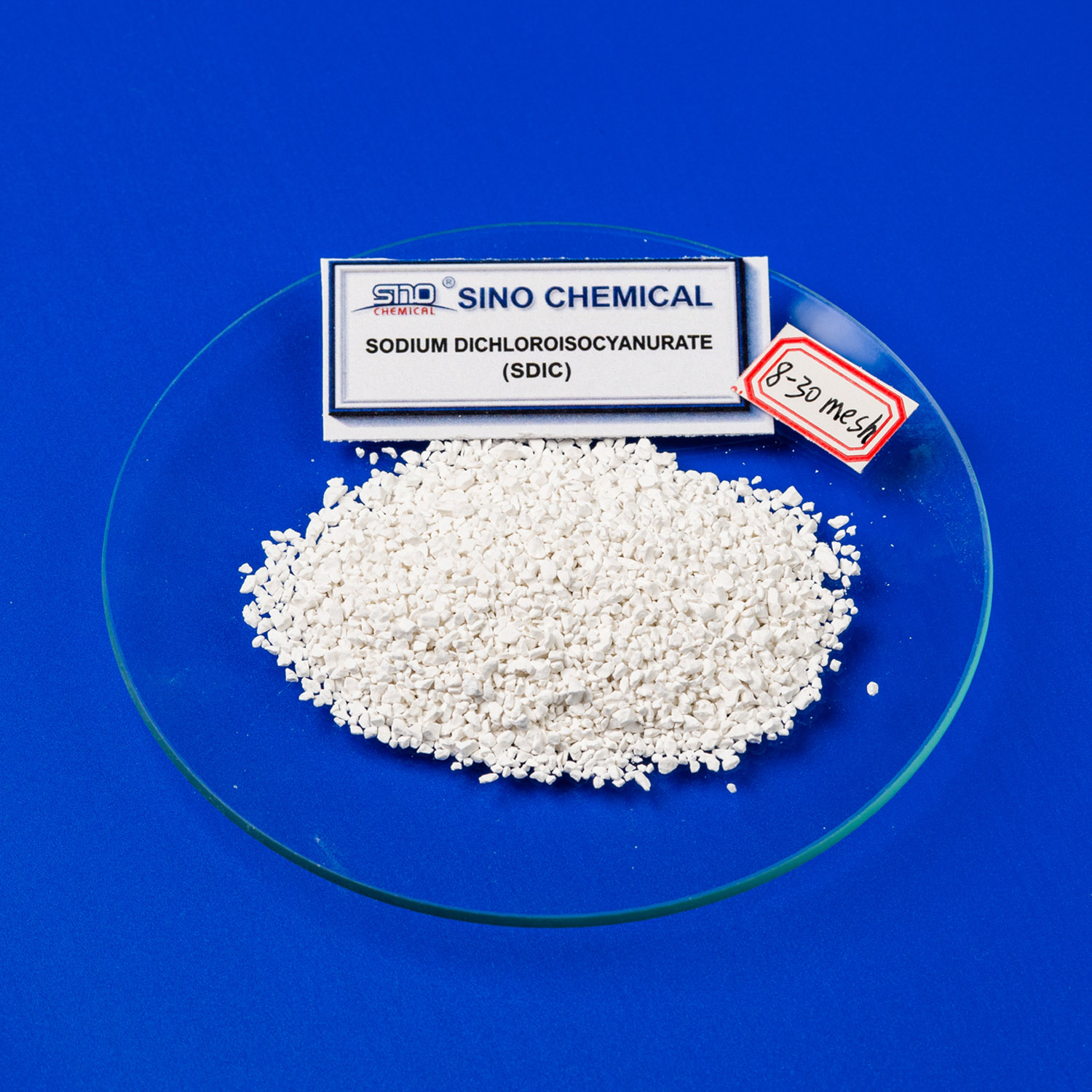
1. SDIC (Sodium Dichloroisocyanurate)
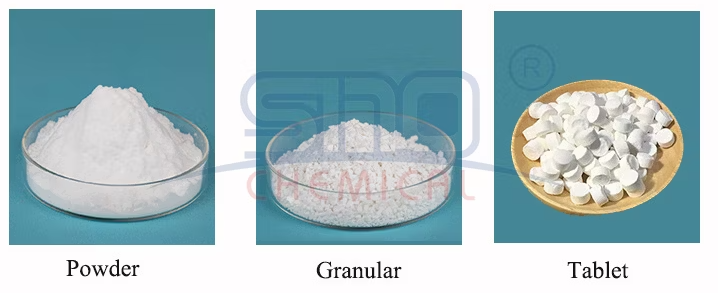
It is a chlorinating sanitizer, commonly available in granular or tablet form.
When dissolved, it performs two key actions:
Sanitization: It provides Free Available Chlorine (FAC) in the form of hypochlorous acid, which is the active agent that destroys pathogens.
Stabilization: It also adds cyanuric acid to the water as part of its chemical structure. This is why it's called a "stabilized chlorine."
2. Cyanuric Acid (CYA)
It has zero sanitizing or oxidizing power. Its sole job is to bind weakly with free chlorine, forming a "shield" that protects it from UV sunlight. Without CYA in an outdoor pool, chlorine can be destroyed by the sun in under an hour.
Critical Management: CYA concentration must be controlled (typically 30-50 ppm is ideal). If it gets too high (above ~80 ppm), it causes "Chlorine Lock," where the chlorine is so over-stabilized that it becomes ineffective at killing contaminants, even if test readings show adequate FAC levels.
Can Cyanuric Acid Replace SDIC?
Absolutely not.
l Replacing SDIC with only CYA means you have STOPPED SANITIZING your pool. You would be adding a "sunscreen" but no "soldier" to fight contaminants. The pool water would quickly become a breeding ground for bacteria and algae, turning cloudy and unsafe for swimmers.
l Cyanuric Acid is a supporting agent. It exists to make the chlorine you add (from SDIC, liquid chlorine, etc.) last longer. It cannot perform the primary sanitization function itself.
Correct Relationship and Usage
1. When using SDIC or Trichlor (other stabilized chlorine):
l You are simultaneously adding both chlorine and cyanuric acid.
l You must regularly test CYA levels, as they accumulate over time and can lead to Chlorine Lock, requiring partial water dilution.
2. When using unstabilized chlorine (e.g., liquid sodium hypochlorite, calcium hypochlorite):
For an outdoor pool, you must add Cyanuric Acid separately to achieve the recommended 30-50 ppm level to protect the chlorine from the sun.
Here, CYA is a standalone product used in conjunction with a sanitizer.
Summary & Analogy
u SDIC is like "Meals-Ready-to-Eat (MREs)" – it contains both the soldier (chlorine) to fight the battle (disinfection) and the protective packaging (CYA) to sustain the soldier.
u Cyanuric Acid is like "empty protective packaging" – it provides sustenance/protection but contains no soldier. A box with only packaging wins no battles.
Conclusion: You cannot use Cyanuric Acid to replace SDIC. They serve entirely different purposes. CYA is a stabilizer; SDIC is a sanitizer. The correct practice is to use them together appropriately, maintaining CYA within the ideal range (30-50 ppm) while ensuring a sufficient level of Free Available Chlorine (1-3 ppm) is always present in the pool water, primarily provided by a sanitizer like SDIC.
Contact: Monica
whatsapp:
 Monica
Phone: +8613342014397
Tel: 86-22-25220868
Email: info@tjchemi.com
Add: No.180 Century Avenue, Dagang Street,Binhai New District, Tianjin, China