Putin’s 2026 Visit: China-Russia Relations Enter New Stage of Endogenous Growth and Global Empowerment
Lead: From May 19 to 20, 2026, Russian President Vladimir Putin made his 25th official visit to China, marking the 30th anniversary of the China-Russia strategic cooperative partnership, the 25th anniversary of the Treaty of Good-Neighborliness and Friendly Cooperation, and the launch of the China-Russia Year of Education. Moving beyond traditional energy and trade frameworks, the visit prioritizes de-hierarchization, resilience, and endogenous growth—upgrading bilateral ties from strategic mutual assistance to value co-creation, and offering a new model for major-country relations in a multipolar world.
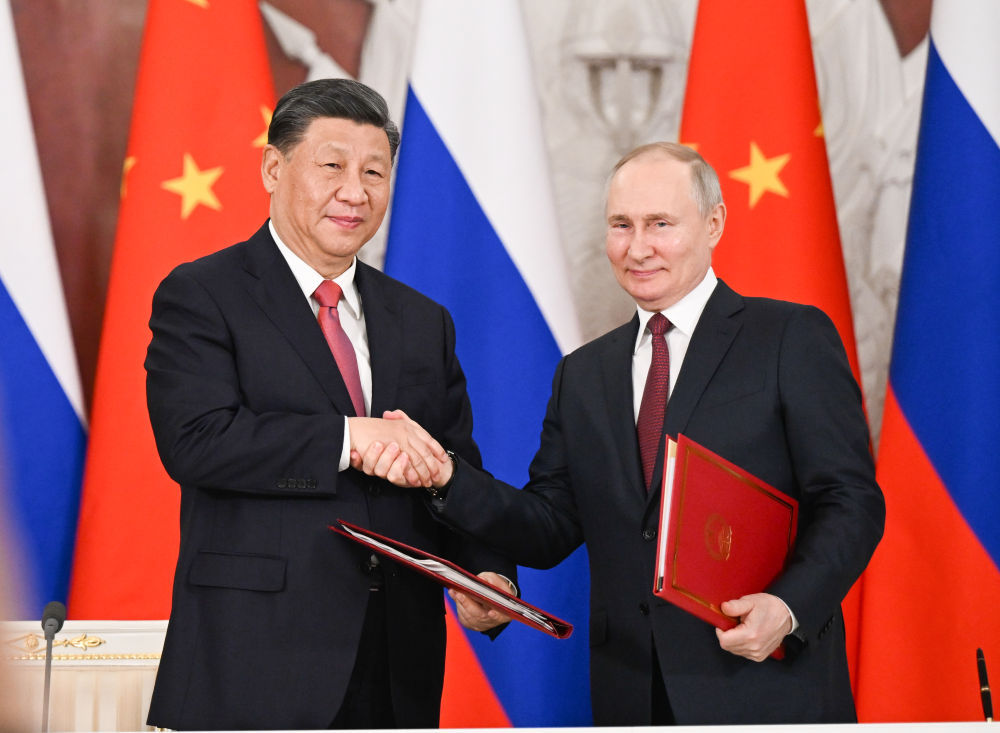
1. New Orientation: From Major-Country Coordination to Civilization-Based Partnership
Unlike Western alliance-based blocs, China-Russia relations have evolved into a unique civilization-based partnership defined by non-alignment, non-confrontation, and no targeting of third parties. During the summit, both heads of state agreed to extend the Treaty of Good-Neighborliness and Friendly Cooperation—not for short-term gains, but for long-term value rooted in equal sovereignty and mutual civilizational trust. Putin noted that bilateral relations have reached an unprecedented high, based on respect for two independent development paths. This breaks the Western binary logic that “a rising power must seek hegemony” or that nations are “either friend or foe,” setting a new paradigm of harmony without uniformity and inclusive coexistence of civilizations.
2. New Breakthroughs: From Resource Complementarity to Full-Chain Innovation
2.1 Economic Cooperation: With bilateral trade exceeding $200 billion, cooperation has moved beyond energy and agriculture into cross-border industrial chains, the digital economy, and green technology. Twenty documents were signed, focusing on a cross-border e-commerce hub, a Far East new energy industrial park, and integrated BeiDou-GLONASS applications—shifting from commodity trade to full-chain collaboration across technology, production, and markets.
2.2 People-to-People Exchanges: As a centerpiece of the China-Russia Year of Education, a memorandum was signed to build a higher education community, supporting 100 joint university labs, expanding student exchanges to 100,000, and creating a digital education platform. The focus is on youth, fostering a new generation of Russians who understand and favor China through online research, visits, and joint research—building a lasting foundation for bilateral ties.
2.3 Security Coordination: Against a fragmented global security landscape, the two sides issued a joint statement advocating a multipolar world and a new type of international relations, proposing common, comprehensive, cooperative, and sustainable security. They deepened coordination at the UN, SCO, and BRICS, opposing unilateral sanctions, bloc confrontation, and interference in internal affairs—providing strategic support for Global South countries and serving as a pillar of global stability.
3. New Global Role: From Order Participants to Shapers of Multipolarization
The visit’s core global value is accelerating multipolarization from trend to reality. The Western-dominated unipolar order faces governance failure, inequality, and civilizational conflict. In contrast, the China-Russia model—based on equality, mutual benefit, sovereignty, and win-win cooperation—offers a non-Western approach to global governance. Russian expert Semibratov called the joint statement a new blueprint for global security, driving a shift from a Western-centric to a diverse, symbiotic international order with its own ideological and diplomatic framework.
4. Endogenous Logic and Irreplaceability
The steady growth of China-Russia relations over 30 years stems from strong endogenous drivers, not reactive pressures. Neither country has geopolitical conflicts, historical grievances, or ideological clashes with the other. Instead, they share consistent positions on sovereignty, anti-hegemonism, and common development. Unlike Western blacks sustained by military alliances or ideological ties, this partnership is built on mutual respect, win-win cooperation, and civilizational learning. Its strategic resilience makes it immune to short-term fluctuations—an irreplaceable model of independent major-country interaction.
Putin’s 2026 visit is far more than routine diplomacy; it is a strategic milestone in three decades of China-Russia relations. From a civilization-based partnership and full-chain innovation to jointly shaping a multipolar world, China and Russia have demonstrated that major countries can coexist without confrontation, civilizations can interact without hegemony, and global governance can function without unipolar dominance. Moving forward, their relations will continue to advance through endogenous growth, value co-creation, and global empowerment—delivering lasting stability and positive energy to a turbulent world.
Contact: Monica
whatsapp:
 Monica
Phone: +8613342014397
Tel: 86-22-25220868
Email: info@tjchemi.com
Add: No.180 Century Avenue, Dagang Street,Binhai New District, Tianjin, China